
Espresso
The essence of the bean

My relationship with caffeine is love-hate. It’s the only stimulant I consume. It makes me feel great when I ingest it, and lingers terribly in my system during the hours it’s not welcome.
To solve this dilemma in an efficient and flavorful manner, the espresso shot has become my go-to morning delivery method. Paired with one cup of coffee, a good bout of exercise, and the occasional cold plunge, it sets you up for a day full of energy and void of the inevitable afternoon crash.
Unlike the chaotic situation we currently find ourselves in—where one opens the news to a barrage of madness around the world and randomly receives a video of a vaguely familiar location that has just been blown up, a location that happens to be a fifteen-minute walk from where one’s mother resides, the same mother who picks up the phone nonchalantly to declare, “Don’t worry, everything is good here. We can hear it but didn’t see it. We’ll be fine.”—a good espresso requires rigorous consistency and a refined process.
This same process ironically provides the meditative distraction one’s brain requires to escape the realities of our current insanity.
The Beans
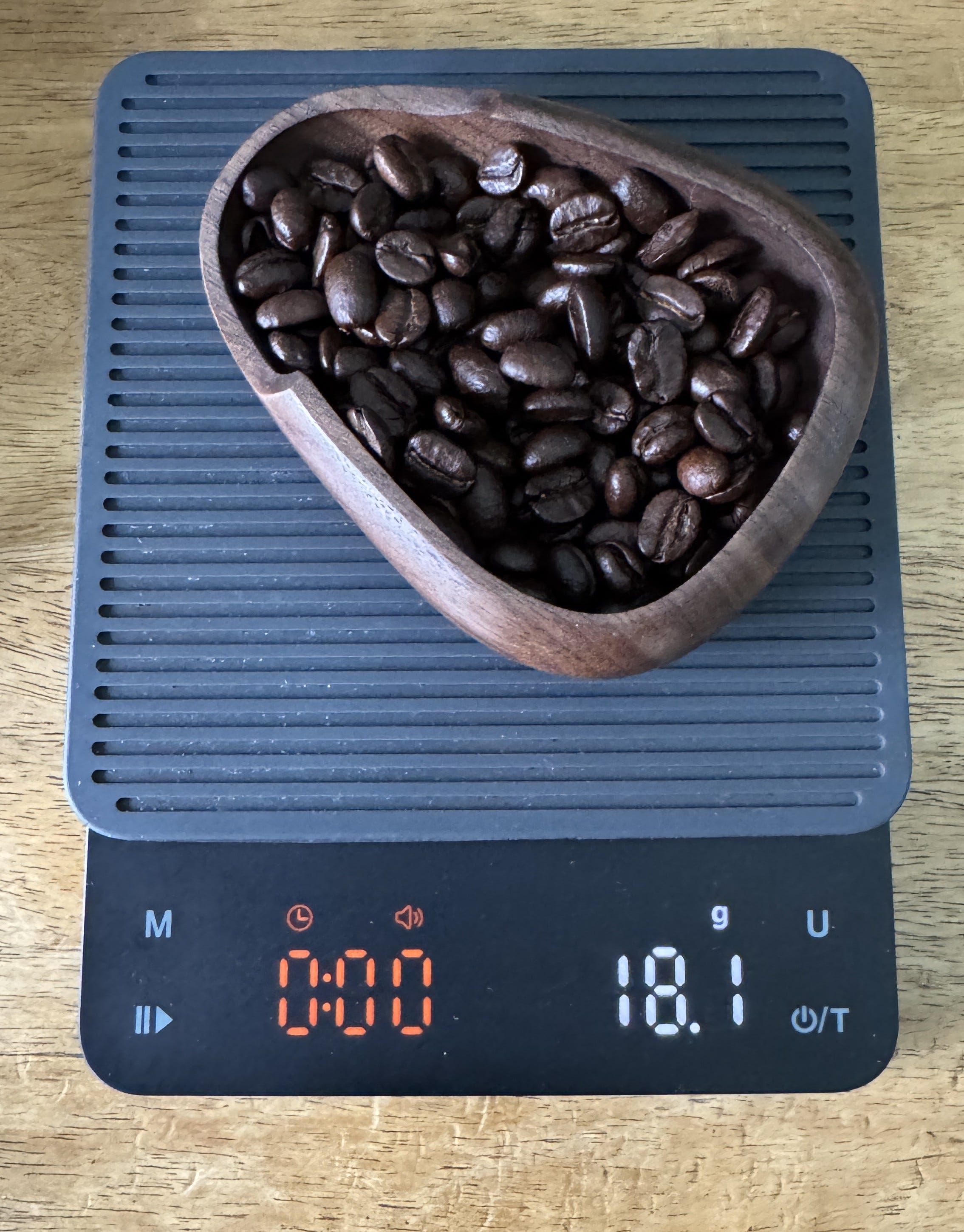
Like any other consumable, the key to a successful espresso shot is high-quality beans. And just like animals, plants, and ice cream, the key to quality is freshness and identity of the source.
Skip the cheap store-bought bulk beans and find someone who roasts their beans freshly, then make a ritual of visiting that store. The smell alone is worth the trip.
Alternatively, buy in 1-lb batches from brands that print the roasting date on the bag. This might sound elitist or overpriced, but it’s not. Prices for decent beans range from $10–$18 per pound, with the lower mid-range providing ample quality options.
A pound will make 24 double shots of espresso.
At $15 per pound, that’s 62 cents per double shot.
Price at your local Starbucks: $3.50.
At your local elitist barista: much higher, with a lot more attitude.
That’s a savings of roughly $3 per drink that can be put toward the next most critical item.
The Machine
The choices are almost infinite here.
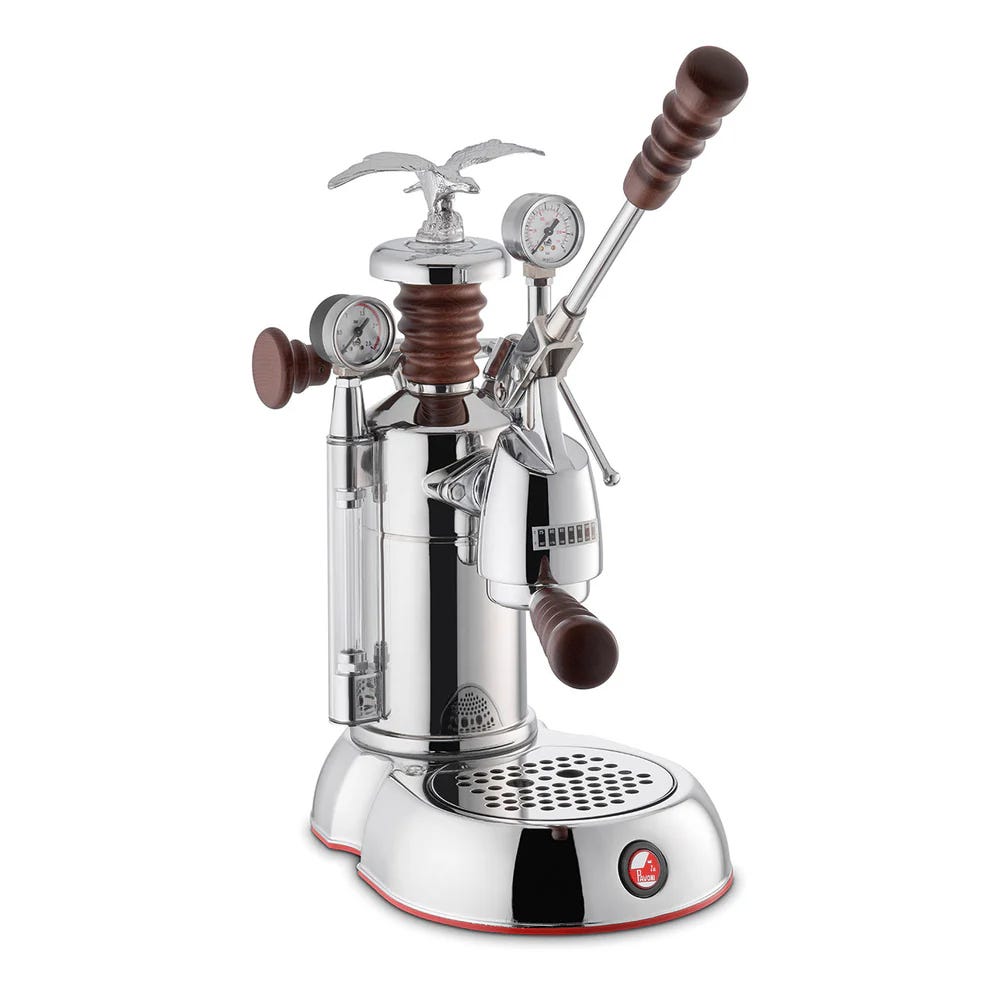
I have my eye on a few completely overpriced and hard-to-operate espresso machines that I have not purchased yet for logical reasons, preserved for a future celebration that should eventually arrive.
Until then, I’ve relied on my Breville 870XL, a workhorse that combines decent aesthetics, functionality, and longevity.
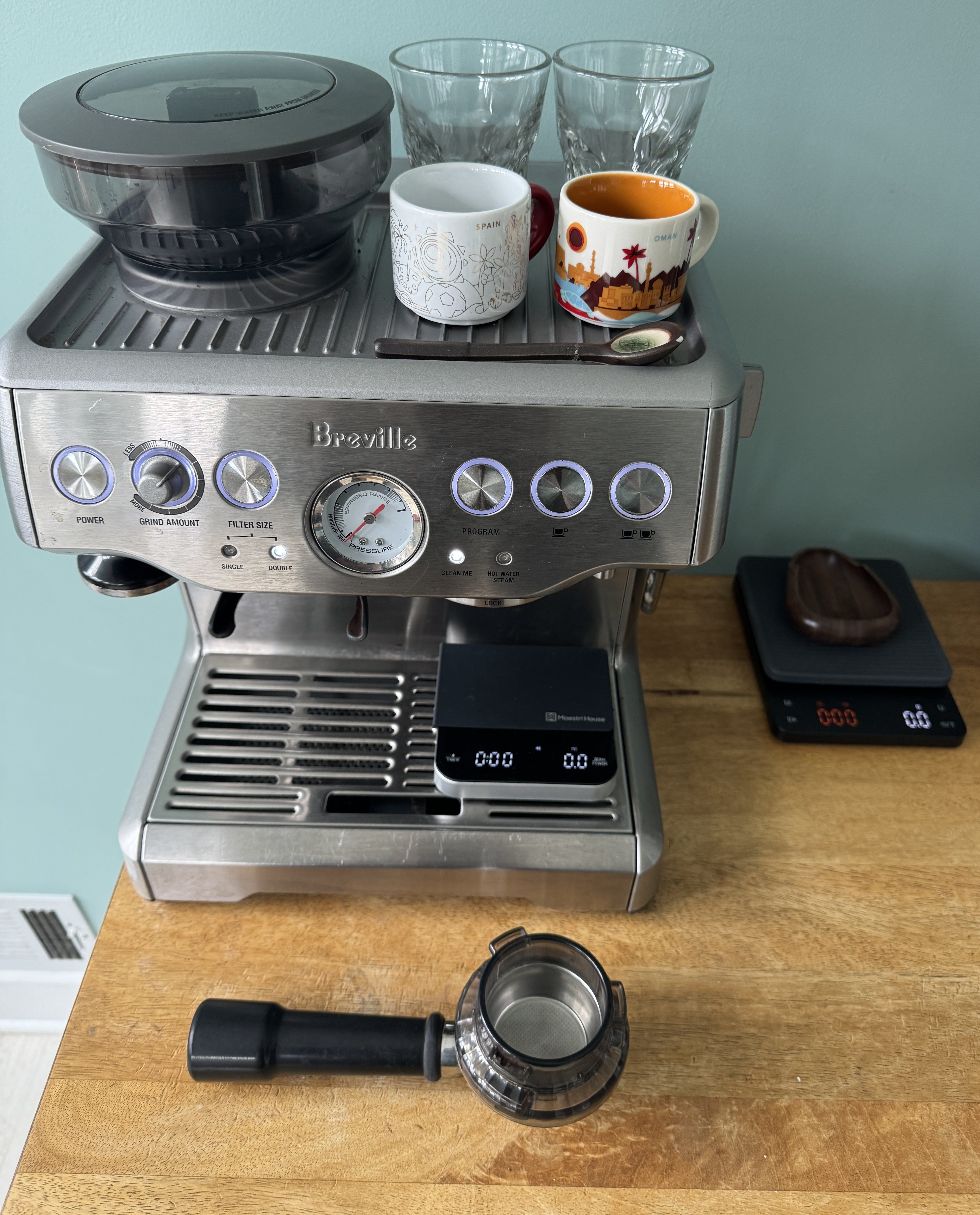
I’ve had mine since 2012 and brewed hundreds of shots with it. Its mechanicals are sound, and wear parts are easily replaceable.
It’s second only to my Japanese chef’s knife in my fondness and appreciation of its utility.
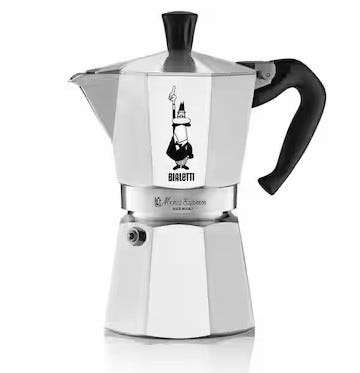
You can also go entry-level like the days of yore and make espresso with a stovetop kettle for less than $30. You won’t get the glories of extreme pressurized extraction, but you will get a decent cup with lots of cash to spare.
The Ratios
I learned this the hard way.
Unlike many of the meals I make, where ingredient sizes are contextually visualized, making a good espresso benefits significantly from accurate weight measurements.
For that you will require not one, but two accurate scales (to 0.1g).
A standard espresso basket will take 18 grams of coffee for a double shot.
The ideal ratio of total drink to coffee is 2:1 for a medium espresso roast.
That’s total drink size to coffee.
18 grams of coffee in, 36 grams total out.
Hence the need for a scale.
Darker roasts require less water, and lighter roasts more, making the acceptable range somewhere between 1.5:1 and 2.5:1.
Of course, you can just wing it and take what the machine offers you, but then you have relinquished control in yet another aspect of your life to a machine that doesn’t know any better.
The Pressure
Extraction at roughly 130 PSI, or 9 atmospheres, is apparently the sweet spot for a good espresso. How and why this came about is unclear, but it works.
This is dependent on the amount of coffee, the fineness of your grind, and the quality of the seal.
The fineness of the grind is determined by the effectiveness of your blades. Coarse grinds reduce pressure; finer grinds do the opposite.
Finer grinds are harder to achieve with old, worn blades, as I’ve learned after many years of compensating by overloading the basket and tamping with ungodly force.


Replace your machine’s blades, or buy a standalone high-quality bean grinder.
Experiment with the settings until you get the right shot texture, and maintain that setting.
Usually once dialed in, the setting will work for a range of beans, but occasionally you will need to recalibrate if your beans are an awkwardly small shape because you were curious what Ethiopia does for coffee, or you succumbed to the allure of a large, colorfully labeled bean bag from Costco that can double as a kettlebell.
Extraction Time
A healthy extraction time should range between 25–35 seconds, from the time you click the on-button until you see the desired weight on your scale.
Faster extractions will produce a sour, watery mixture, and ultra-long extractions will produce a tar-like drip of liquid that is more akin to a viscous punch in your mouth.
Both are still consumable, but preferably avoided.
The good news is that the imperfect shots can be mixed with some hot water to make an Americano as you mess around with your settings to reach the ideal state.
No bean needs to go to waste.
To Caff or Not to Caff
Traditional decaffeinating involves treating the beans with ethyl acetate to destroy the caffeine molecules, while also destroying the flavor.
Despite my unwavering support for the petrochemical industry, I much prefer burning fossil fuels over ingesting them.
I maintained this stance until I discovered the Swiss Water process, invented in Switzerland in the 1930s (where else?) and commercialized in British Columbia in the late ’80s.
Green beans are soaked in liquid to extract their essence. The liquid is then passed through specialized carbon filters (fossil fuels back to the rescue) that capture the caffeine molecules. The liquid is reused to soak fresh green beans, where caffeine flows out due to the powers of physics.
The result: high-quality, expensive, but delicious decaffeinated beans.
Find them to bring back your nightly espresso pleasures.
Frothy Business
Milk has largely left my household since a nosy colleague pointed to a carton in the pantry during one of my unwise extreme diet phases and showed me how much sugar was in a cup.
I haven’t missed the bloatiness that comes with it, and with the elimination of breakfast and the lack of babies in my household, milk has become an intermittent guest.
Frothing a few ounces to top your espresso with some foam, or better yet, making a full latte, is always a treat.
If you do so, get the full-fat version, and ensure you have a victim to blame for your flatulence.
Other Implements
I’ve bought and returned many items that proved either bulky or frivolous.
Naked portafilter
Cool to view, but prone to occasionally spraying espresso in random directions.
Ornamental wooden knock box
Good for disposing of espresso pucks, bad for space utilization. Replaced with a tin can.
WDT (Weiss Distribution Tool)
A Zen rake equivalent to remove clumps from your ground coffee. Replaced with a metal toothpick.
Puck screens
An additional step in the process and one more item to clean (and lose). Avoided with accurate measurements and good tamping.
Constant-pressure tamper
Still on the fence about this one. I enjoyed the consistency of the 30-lb spring-loaded press, but preferred the compactness of my Breville tamper and its ability to disappear into the machine when not in use.
The exception: A dosing funnel
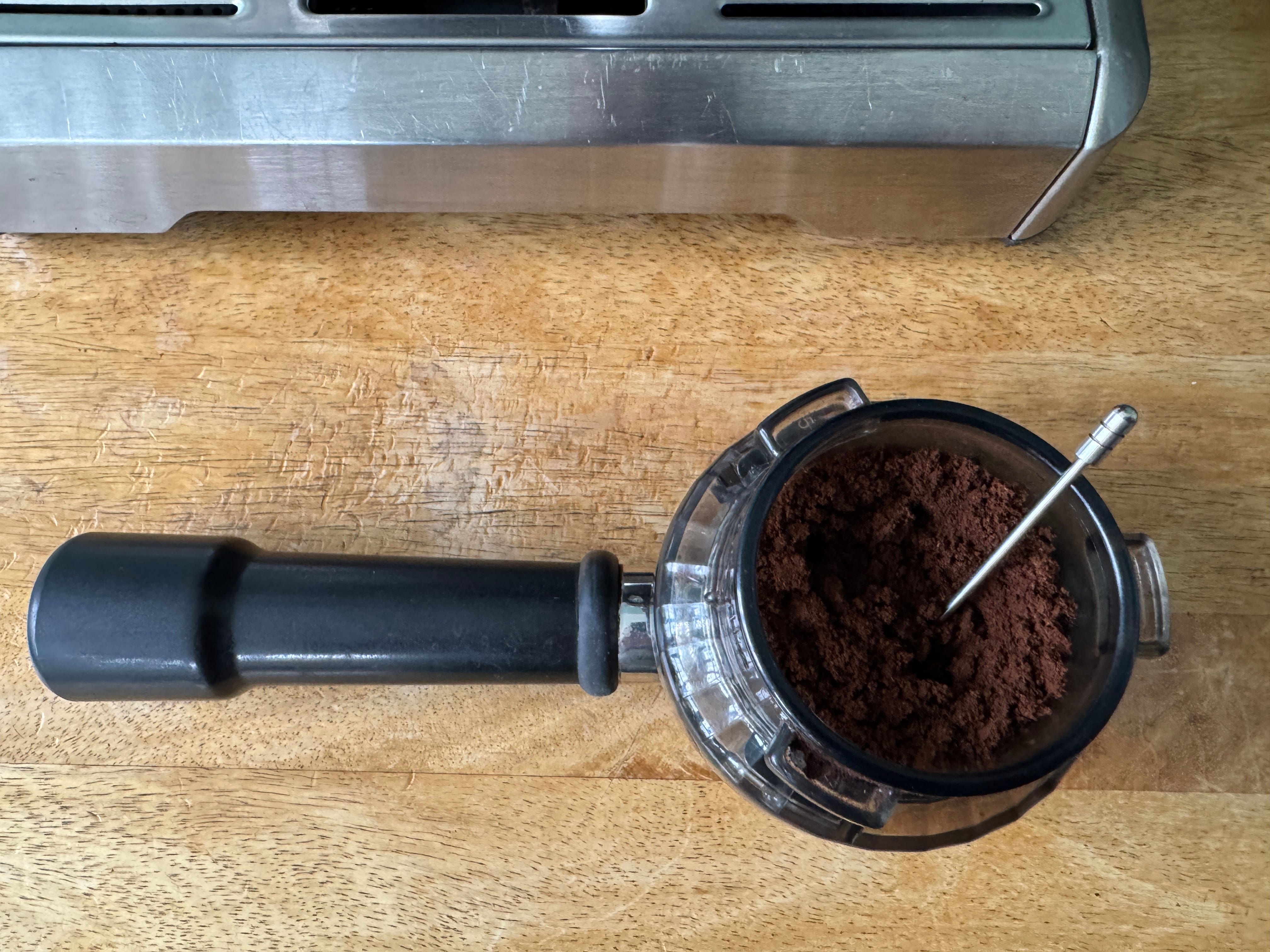
The plastic ring helps guide grinds into the portafilter and saves unnecessary cleaning
Conclusion
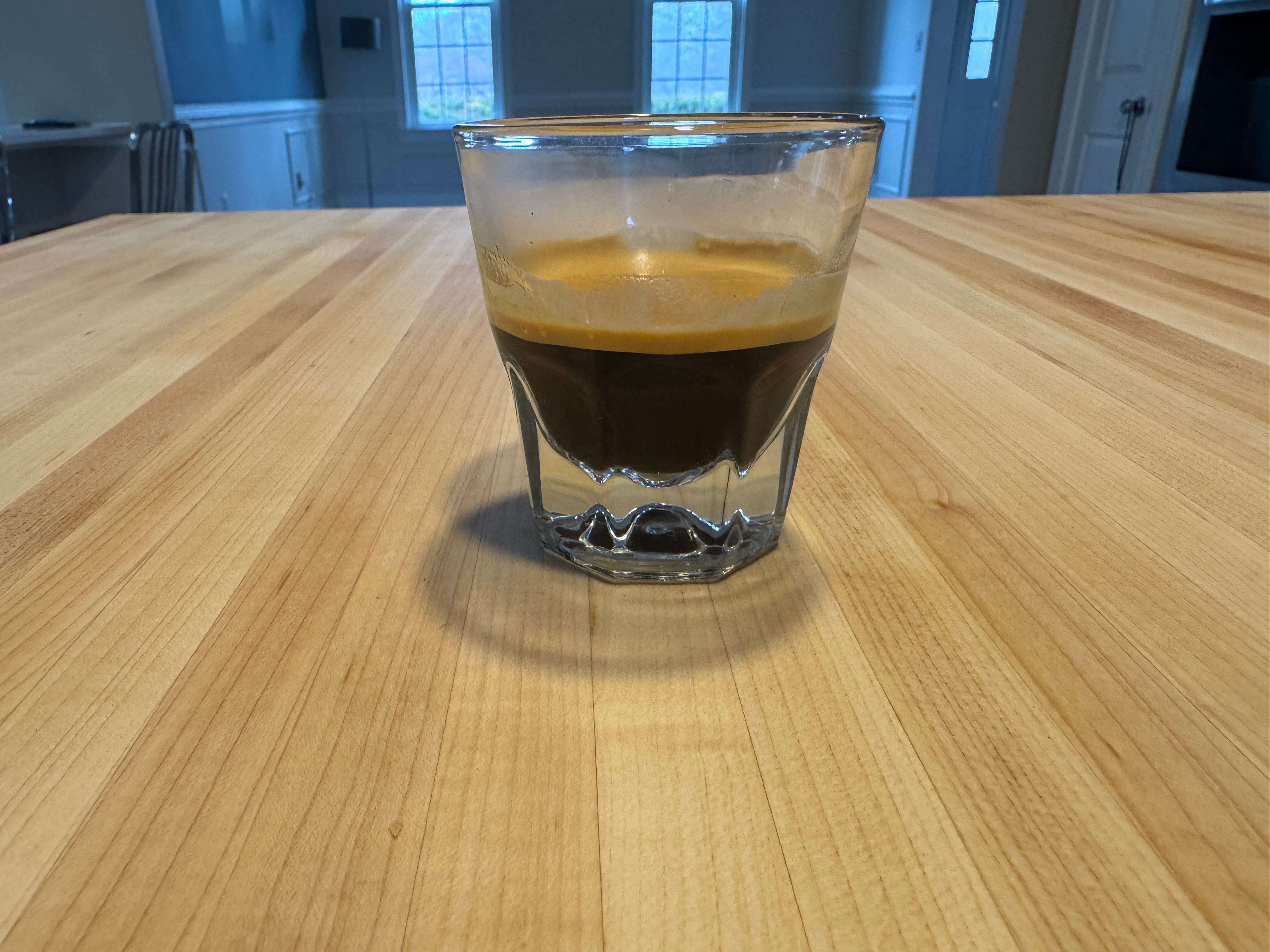
Extracting the perfect shot brings me almost as much joy as watching the consistently oscillating billows of smoke from a 250°F smoker ready to receive an extra-large rack of beef ribs.
The joy is amplified during Ramadan, where I’ve been choosing the trade-off of waking before sunrise to have my coffee and forsake my sleep to fend off the late-afternoon headache that comes from the lack of caffeine and hydration.
The quiet hour becomes something else entirely: a moment to ask the universe for good health, peace of mind, and the end of the illogical atrocities afflicting many around the world.
Great write-up of your process! We grind daily for our large drip coffeemaker using quality oak-roasted beans - haven't found any better cup to start our day...although the allure of espresso or an Americano when you don't need a full carafe is appealing. We'll keep your advice in mind for when we build sufficient courage to give it a go!
Love this Sameh! If one sees grinding beans each time you want an espresso to be a chore, I say it’s worth the trouble. Better yet, you see it as meditative.